Over the years, I’ve received different questions from parents who want to improve the writing skills of their children.
“Airo showed me a paragraph. What concerned me are the many instances of incorrect spellings, grammar, and punctuations! Grabe, do they still teach these in schools today?”
“I caught my son using AI for his writing assignment in school. And based on what I saw, he simply copy-pasted it. How can I stop him from doing this?”
“Whenever I ask my child to write, it’d take her several minutes staring blankly at her paper. Then she’d cry and say, “I don’t know how to do this, Mom! “How do I address this?
Different scenarios, same issue. Writing is a difficult task for the parents’ children.
More often than not, here’s what a parent might say:
Scenario 1: “Anak, you have so many grammar, spelling, and punctuation mistakes,” while underlining each error.
Scenario 2: “Anak, you should stop using AI for writing! It won’t do you any good. There’s no learning there!”
Scenario 3: “Madali lang yan! Ganito lang yan, o!” Then proceeds to write, to set an example.
The first tried to correct, the second discouraged AI use, and the third tried to simplify the task for the child.
The children in all the scenarios may have writing errors, but they have actually done something important:
- The child developed an original idea, sequenced events, or tried writing a compound-complex sentence.
- The child came up with a good prompt for AI.
- The child acknowledged that he or she doesn’t know what to do.
So what’s really happening?
Simple. Some of the things adults typically associate with good writing are only parts of a child’s writing journey:
- Generating ideas
- Organizing ideas
- Developing reasoning and vocabulary skills
- Sentence and paragraph construction
- Developing voice
- Improving reading and grammar skills
- Improving mechanics
Yes, good grammar and reading comprehension skills matter, but they don’t make up the whole enchilada.
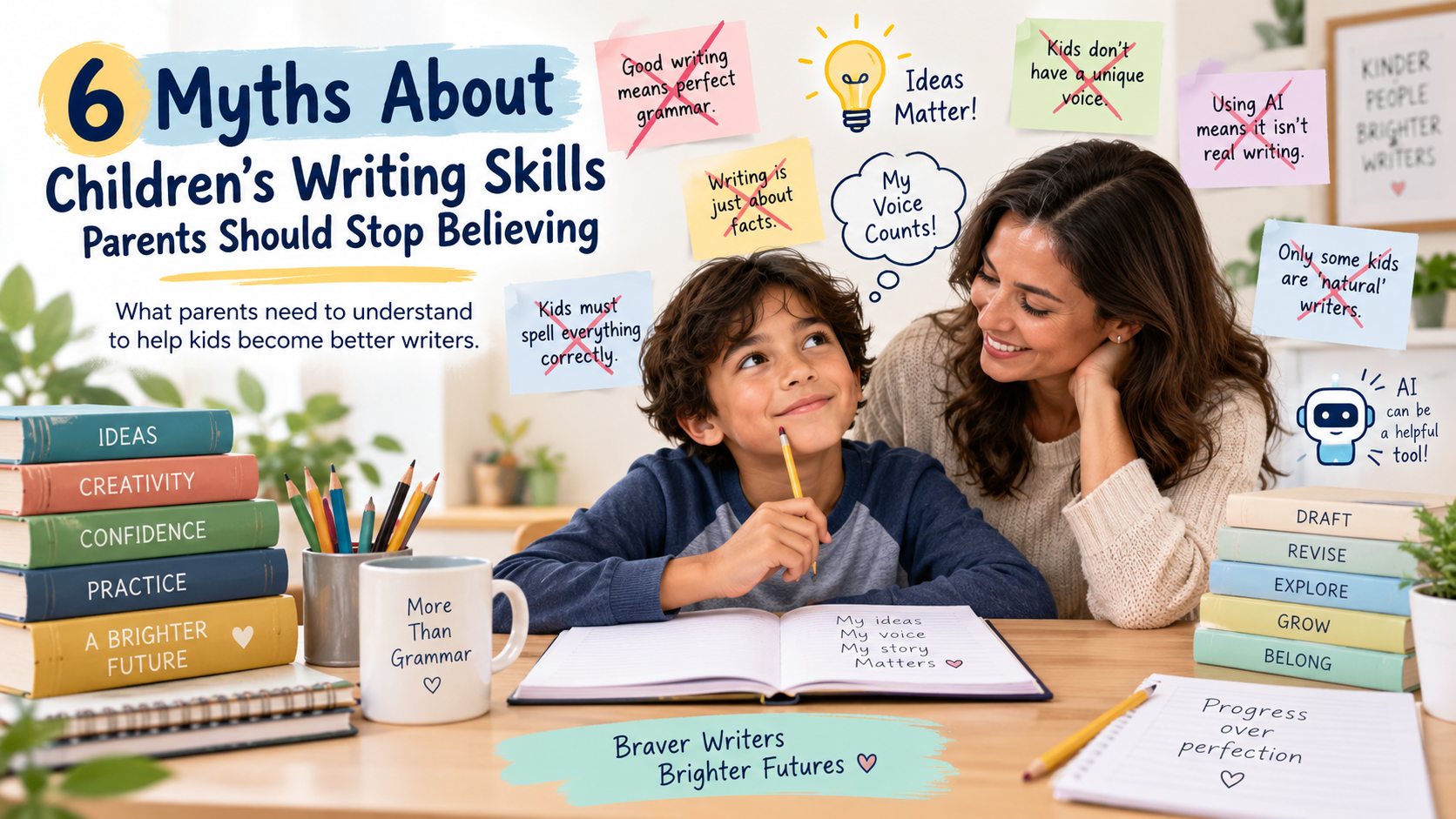
This is just one of those writing myths about children’s writing, and this blog post is all about busting them so you can help your kids and teens improve their writing skills.
Myth #1: Good writing means correct grammar, spelling, and punctuation.
Many people believe that if a child’s paper contains many errors, he or she must be a poor writer.
Not really. I’ve had many students who had very good grammar and reading comprehension skills, but when asked to write, they struggled.
Why? It’s because the ability to write well is not synonymous with good writing mechanics.
What to do:
Focus on the content. Is your child writing something interesting? Something that others can learn from?
If yes, then help them express their thoughts first. Good mechanics can come later.
Take a look at this essay draft written by one of our former students. That time, she was running for the top honour at her school.
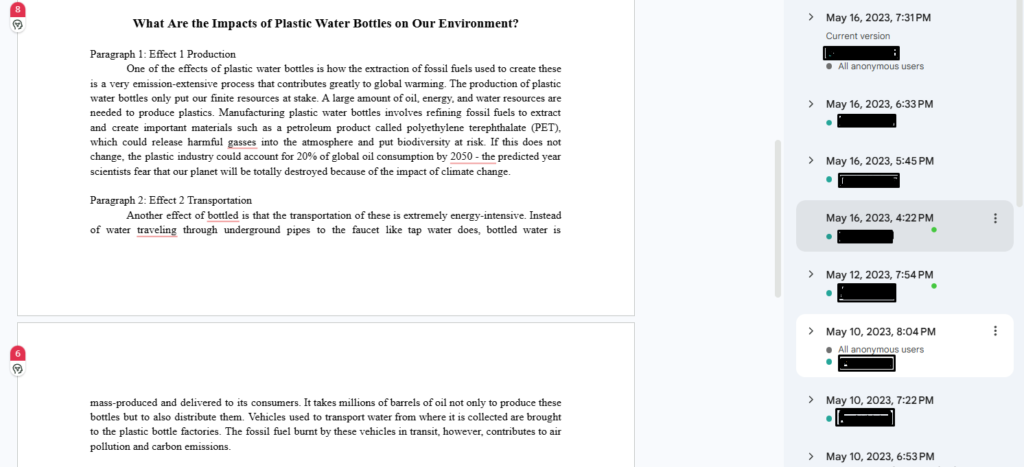
During our critiquing sessions, I focused on helping her improve her content and not on every grammatical error she made. I encouraged her to just write words, sentences, and paragraphs, even if they didn’t seem connected.
Here’s a part of the final version.

Myth #2: Children need to master grammar before they can learn to write.
Teach all the grammar rules first, and then a child can write good essays and stories.
No. Writing and grammar can be developed together, a step at a time. Give grammar lessons alone, for several months, and a child can feel bored and frustrated. Give writing lessons only, and you’ll end up with a confused and overwhelmed child.
What to do:
Give them opportunities to apply the grammar they just learned.
Let’s say you want them to learn how to use pronouns correctly. Providing them with fill-in-the-blank activities or choosing the best pronoun for a sentence just won’t cut it.
Instead, why not turn it into a poem-writing activity like the one below?
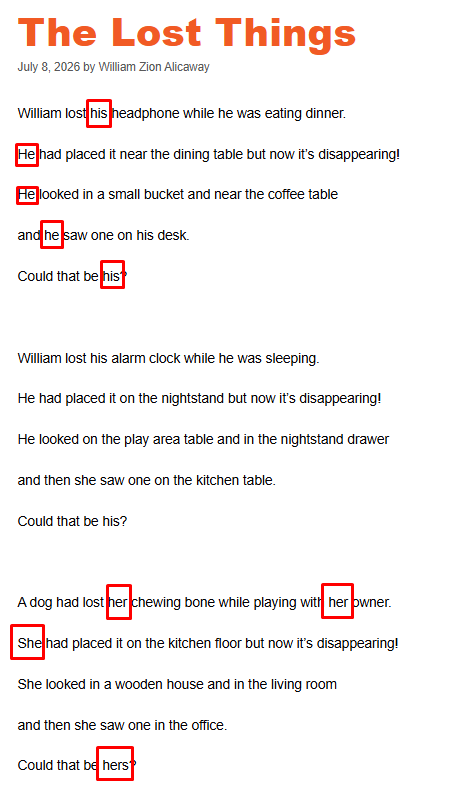
Not only will children learn grammar – they’ll have fun writing and feel proud seeing their finished poem.
Myth #3: “Correcting every mistake will make a child a better writer.”
Doing this can actually develop writer’s block, and I’ve seen it happen not only with adults but with children and teens too. It hampers the natural flow of creativity.
When children are writing, they’re in what writers call “being in the zone”. They are in a focused mental state where writing is effortless, as if words come out naturally.
And believe me – once that zone is broken – it’s very difficult to go back.
What to do:
Let them write. Just let them pour their hearts out. Editing and revising can be done when your young writers are done.
You can also try my technique whenever I need to do some serious writing: I put my headset on. This simply sends a signal to my husband and anyone who happens to be at home that I should not be disturbed – at all!
Myth #4: “If a child reads a lot, good writing will come naturally.”
No. Reading and writing may be connected skills, but they’re not interchangeable. A child may have impressive comprehension skills but might find it difficult to generate and organize ideas.
Watching a YouTube video on how cakes are made can give children and teens ideas on how their favorite desserts are made. But to really learn how to make a cake, they need to bake one. To do so, kids need to measure the ingredients correctly, use proper equipment, set the oven at the right temperature, and know when the cake is done.
What to do:
Once your children are done reading, ask them to write their reaction to the material. Which passages, quotes, or chapters did they like the most? How did the author make them feel?
If your child finds it difficult to write a short review, send me an email at [email protected] and I’d gladly send you a customized template for free.
Myth #5: “Some children are simply natural writers—and some aren’t.”
“My daughter just isn’t a writer. She doesn’t have the talent for it.”
Sure, having innate linguistic skills is an advantage. Children with this ability learn to read and write faster. However, talent can only do so much. If a talented child does not learn correct writing techniques, he or she can write, but only up to the genre and level he or she is familiar with.
Let’s say your daughter is a good storyteller. She can craft stories out of nowhere. But when asked to write an essay (and I tell you, a lot of essay writing is required in schools), she hesitates. She doesn’t know what to do.
Why?
It’s because she wasn’t exposed to essay writing.
But here’s the good news: writing is a learned skill. It’s something anyone can learn through guidance and plenty of practice. So a child who does well in creative writing can also learn how to write essays.
What to do:
Ask your child to write about simple topics like his or her favourite place, person, or food. You might ask, “Is this essay writing?”
Yes. These topics serve as an introduction to essay writing. Essays, after all, originated from the French word ‘essais’, which means an attempt to reflect.
If your child finds it difficult to start, ask him or her to do the following:
- Brainstorm on the topic
- Organize ideas
- Draft
- Edit
- Revise
Here’s an easy way to remember this sequence: BODER.
Myth #6: “AI helps children become better writers.”
Here’s something worth knowing: AI is here to stay, so yes, I sort of agree, but children should learn to use it properly so they can be better writers.
Take note of how I stressed properly.
Yes, children must learn to use it, but not when they’re still learning how to write.
If children use AI, from brainstorming to revising, what cognitive work is done?
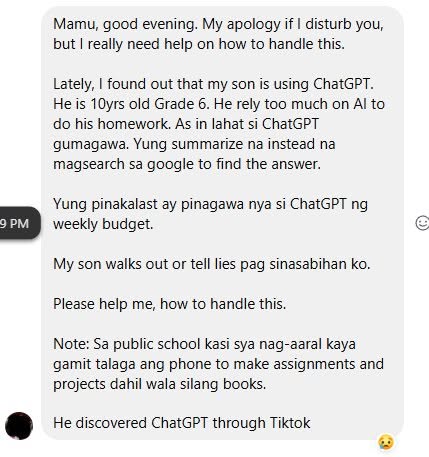
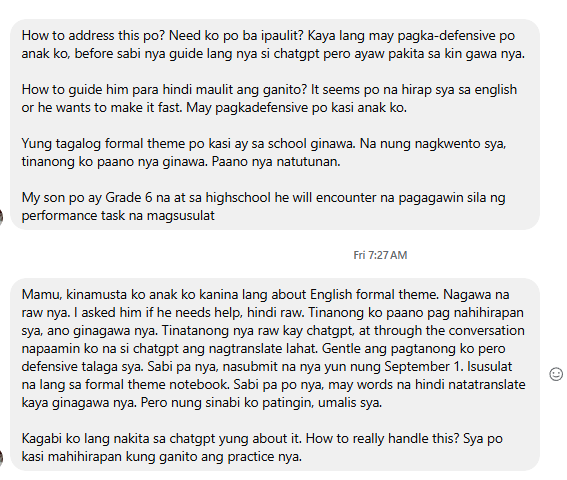
Above is an example of improper AI use. Several times, this parent has been asking her son to show her his drafts, but he hasn’t given her any.
Just recently, this mother has messaged me that her son admitted that he can’t write an essay on his own, that he needs ChatGPT to be able to do so.
This is precisely why I do not allow students to use AI in our classes.
I only allow them to do so if and when they already have writing foundations. They have to learn everything first, from brainstorming to editing. Otherwise, it’s AI that’s learning, not them.
So what should you do if your child uses AI?
What to do:
When I posted the above message on my Facebook wall, I got a lot of answers, but this one, from Ms. Pam Mariano Baluyo, was deemed best by others (and by me too!)
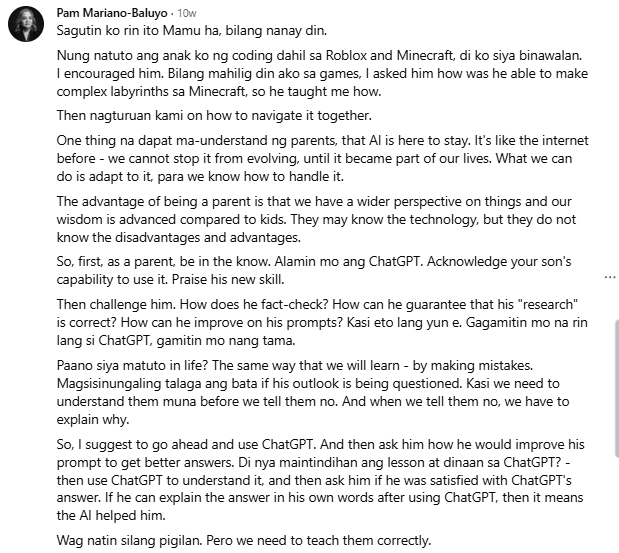
Yes, for children to become better writers, they can use AI—WISELY. Otherwise, it’ll become a debilitating crutch rather than a helpful guide.
Conclusion: Better Writing Is Built, Not Corrected Into Existence
Children can learn and hone their writing skills if you provide them with opportunities to write something meaningful, give them specific instructions and feedback, allow them to make mistakes, and learn how to correct their own writing so they can write independently down the line.
The next time a child shows you what he or she has written, don’t reach out for that red ballpen and start crossing out the mistakes. Instead, ask this question that I always query my students with: “What are you trying to say here?
Polishing their words should come later; what matters more is teaching them that their thoughts are worth developing and sharing with others.
About the Author

Liberty A. Baldovino is a writer, content strategist, and writing coach who believes that every child has something worth saying—and can learn how to say it well.
She is the founder of Bubots Writing and Tutorial Services, where she works with children and teens ages 9 to 17 to develop stronger skills in writing, grammar, reading, and communication. Her approach focuses not only on correcting mistakes, but on helping young writers understand the writing process, discover their own voice, and gain confidence in expressing their ideas.
As a writer and educator, Liberty enjoys turning complex ideas into clear, engaging, and meaningful content. Through her articles, lessons, and work with families, she hopes to help parents better understand how children learn to write—and how the right guidance, encouragement, and plenty of practice can help young writers grow.