
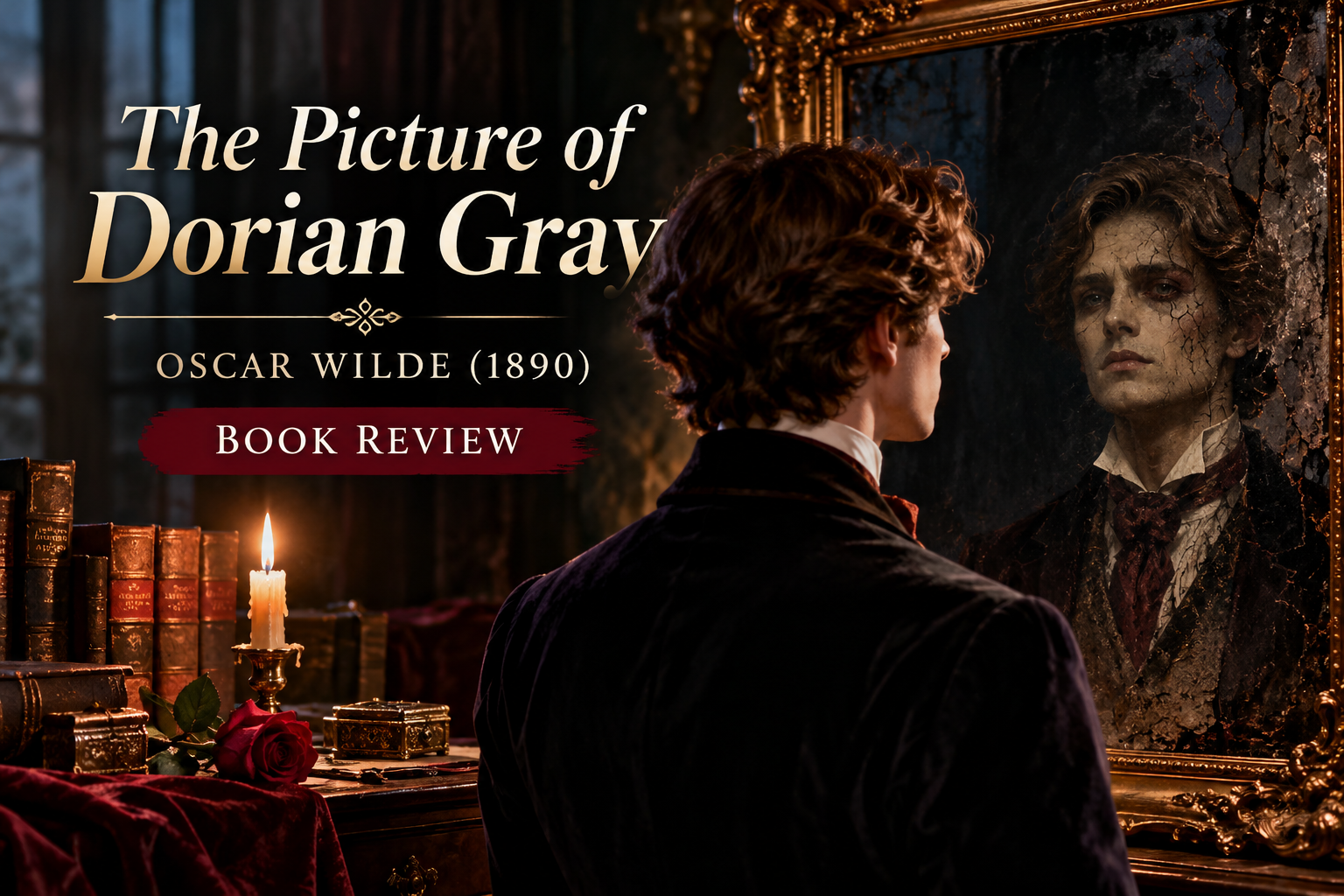
The Picture of Dorian Gray is a Gothic novel written in 1890 by Irish author, poet, and playwright Oscar Wilde, who lived from 1854 to 1900. Besides the novel, he also produced plays and short stories, which included The Happy Prince, The Nightingale and The Rose, and The Ballad of Reading Gaol. The Picture of Dorian Gray is considered Oscar Wilde’s most famous title, as it delves into philosophical themes of how narcissism can degrade a person over time, as seen with its protagonist.
The plot of the novel revolves around the decay of Dorian’s life and moral conscience because of his own portrait, painted by Basil Hallward at the beginning of the story and mostly kept in a dark room away from anyone but him. Throughout the novel, the painting acts as a mirror to his own hypocrisy and failures that eventually led him to his dishonorable demise because of the wrongdoings he committed with various people. This moral decline was further exacerbated by Lord Henry Wotton’s corruptive influence on his philosophies. In fact, these two men became the most memorable characters within the entire novel.
As obvious as it should be, Dorian Gray is the main focal point of the story. I find it really fascinating to see and observe how his entire life turned completely upside-down because of his vanity as the story progresses throughout the chapters. He went from an innocent boy to a self-indulgent maniac, ending up doing harmful acts such as breaking Sibyl Vane’s trust in Chapter 6 and alienating his own friend Basil Hallward up until Chapter 13. One other character that also stood out in the novel was the notorious Lord Henry Wotton, as all of the boy’s mishaps would not even occur if it were not for his manipulative philosophies. He became a very crucial player in leading Dorian to his demise after first meeting him in Chapter 2. On the silver lining, even though his quotes came off questionable, his fancy, unique verbal communication style captivated the audience and had them immersed in the pride of Victorian literature.
In relation to fancy communication styles, the novel is a perfect example of Victorian-era-style writing. For one, every chapter showed excellent grammatical structures, especially in the usage of verbs, adjectives, and even nouns to create a concise idea in the reader’s mind of what was going on in the novel. The author also followed a “Show, Not Tell” rule as he wrote various descriptive scenes to indicate the exact actions the characters did and also the atmosphere of the environment through pure text alone. This was also helped by the use of various jargon and archaic terms such as “ardent,” “sanguine,” “wan,” “opera-glass,” “cheroot,” “dandies,” and “protégé,” among others. Given these unique perks about the novel, though, there are still quite significant yet minor flaws with its pacing.
For one, some of the details were quite obscured, especially when it came to the time span Dorian took in reading the yellow book Henry gave him, as mentioned in Chapter 11. However, this was made deliberate by Wilde to give a sense of how the boy had lost track of time by paying too much attention reading the cynical book. Another minor criticism I would like to point out is how the rest of the characters in the novel were not as active in the plot as Henry and Dorian, especially Basil Hallward. Even though he appeared early on at the start of the story alongside Lord Henry, his role in the novel gradually diminished up until he met his fate in Chapter 13 as Dorian stabbed him to death. Nevertheless, this was an additional plot point deliberately established by Wilde showing how rotten Dorian’s psyche had been at that point.
On a scale of 0 to 5, I would rate this novel with a 4.9 out of 5. Even with its flaws and obscurities, this novel is actually a treat for anyone who loves Victorian-era writing. It shares a lot of philosophical themes about the dangers of valuing oneself too much, which would intrigue any young reader to explore as they read through the chapters. It also sparks a lot of inspiration and curiosity for readers like me as I get new ideas from the novel—whether it is in writing lines for a certain character or even making an adaptation of it. This novel is a must-read for students, hobbyists, and critics alike who want to study the rotten nature of superficial vanity and narcissism, learning from the moral failures of the young boy who chose to embrace his physical beauty and youth instead of spiritual purity.
About the Author

Jose Enrique Villacorta Joson is a graduate of Senior High School from Bulacan Ecumenical School under the STEM branch. He started his journey in the Bubots Writing Class last November 2025 in the Advanced Class. Today, Jose strives to further improve his writing in the near future so that he may be able to pursue his dreams as a writer and an artist.
Keep exploring BUBOTS writing.
Read more stories, articles, essays, and ideas from our growing community.